AI recommendations are not fixed. They change based on the product information, signals, and sources models can access. Our latest research quantifies how much Novi’s optimization can shift those recommendations.
Across multiple product categories, we compared what the latest GPT model, GPT-5.6 Luna recommended with web search turned off against what shoppers saw in the regular chat experience after Novi’s category intelligence recommendations had been implemented.
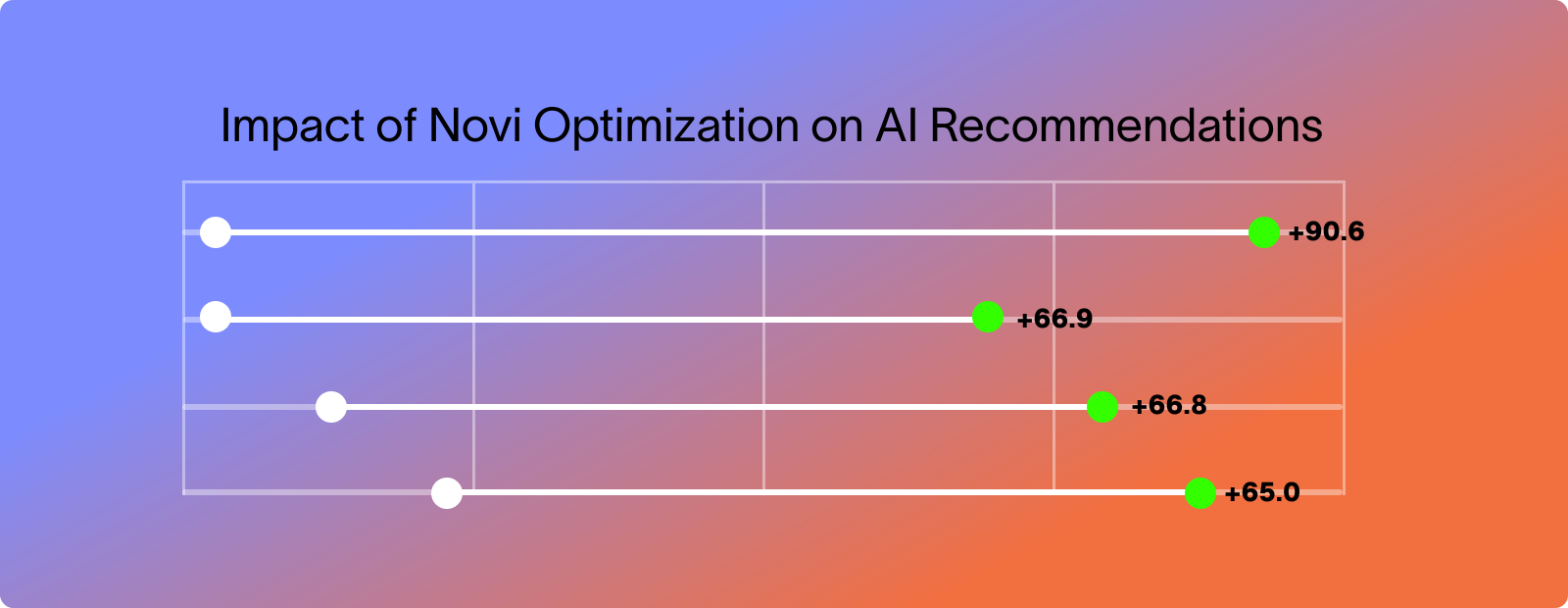
The difference was substantial. Across the strongest-performing categories, Novi optimization was associated with recommendation-rate lifts ranging from roughly 34 to more than 90 percentage points.
The first step was measuring what the model already knew.
By polling the model directly with web search disabled, we created a controlled baseline that showed how often each product was recommended without access to current information.
We then tested the same types of natural shopping questions through the standard chat experience, without forcing search or using special phrasing. At that point, the model could access the live digital footprint that had been updated based on Novi’s recommendations.
The difference between those two conditions gave us the recommendation-rate lift.
The strongest signal in the research was how consistently the pattern appeared across very different product categories.
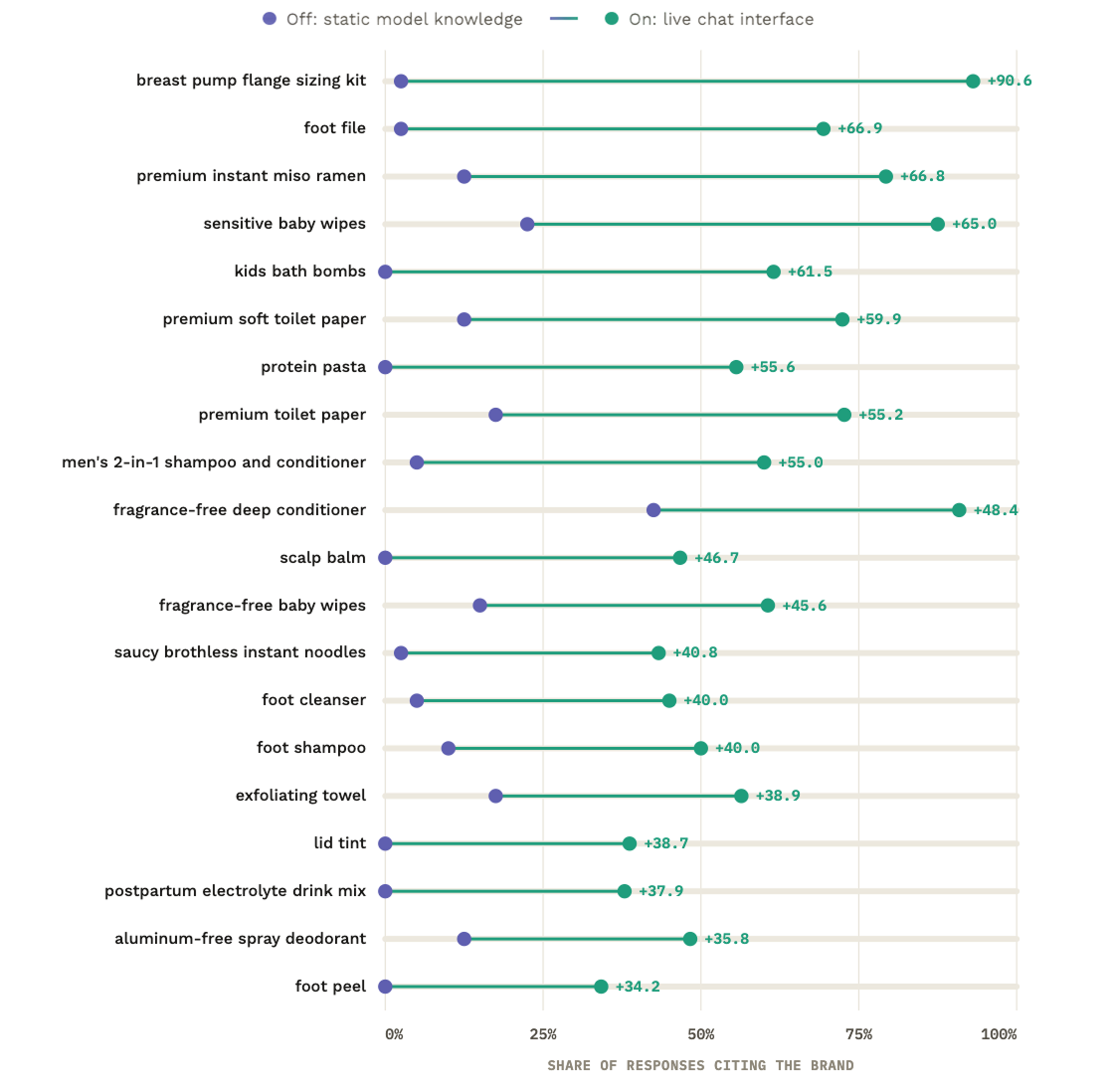
Looking at the top 20 categories by lift, the gap between what the model knew from its static training data and what appeared in the live ChatGPT experience ranged from roughly 34 to more than 90 percentage points.
The largest gains appeared across categories as varied as breast pump flange sizing kits, foot care, instant ramen, baby wipes, bath products, toilet paper, hair care, and personal care.
That breadth matters. It suggests the impact of Novi’s optimization is not limited to one type of product or shopper question. Once Novi’s recommendations were reflected across the live digital footprint, the optimized products appeared substantially more often in AI responses across a wide range of categories.
A recommendation rate on its own does not tell you whether optimization worked.
What matters is the change from the baseline: how much more likely the product became to appear once Novi’s work was reflected across the live digital footprint.
That is why we focus on percentage-point lift in recommendation rate rather than the end recommendation rate alone. In the strongest categories, that lift exceeded 90 percentage points.
This is also why Novi’s approach goes beyond tracking prompts. Our methodology focuses on how AI understands a category, what product-level signals influence recommendations, and what brands should change across product data and content to improve how their products are interpreted, selected, and ultimately recommended.