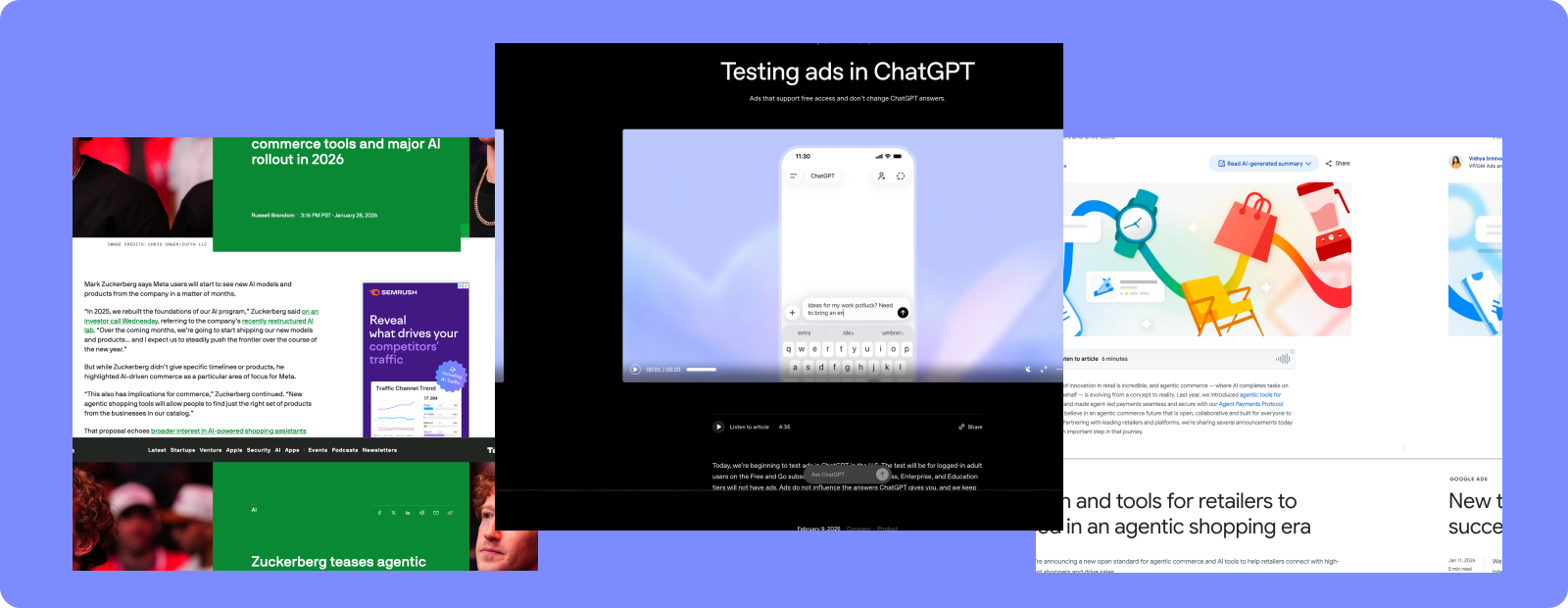
In the 2025 holiday season, over one-third of customers, and an overwhelming 56% of Gen Z, plan to ask AI for help finding gifts. Those numbers are likely to grow, and grow fast; increasingly, customers believe that using AI recommendations will “reduce stress and fatigue during [the] holidays.”
A crucial recipe for every company’s success is a successful strategy for customers to connect with, and ultimately purchase, their products. Yet despite more and more customers flocking to AI platforms, 47% of companies have no idea if they appear in AI responses. Why?
In theory, you might know that AI marketing, including AEO (Answer Engine Optimization), is an incredible opportunity for brands and products to connect with customers more intimately than ever before. But in practice, you might worry that successful AEO strategy is incredibly complicated – and you’d be right.
Not all AEOs are created equal. Many tools claim to position you for the future, but too many fail to truly understand the practical, actionable tools that will help your company thrive. And utilizing the wrong tool can come at a steep cost; it’s all too possible to spend tens of thousands of dollars a month on AEO while failing to show clear returns on investment.
So how can you identify a trusted AEO partner, one that ensures that customers utilizing AI platforms will not only find your products, but click “Purchase”?
Knowledge is always the underlying foundation of success. By understanding and avoiding some common misconceptions around AEO best practices, you can avoid ineffective strategies and be confident in selecting the tool that’s right for you.
One of the most frequent errors we see today is conflating AEO with SEO. It’s an understandable impulse; on the surface, traditional SEO like Google searches and modern AEO seem awfully similar. They both respond to customer inquiries, and as a business owner, you want your products to be at the top of both lists, right? Shouldn’t an SEO expert, or adding AI on top of your already killer SEO strategy, work?
Not really. That’s because traditional SEO and today’s AEO rely on fundamentally different data structures.
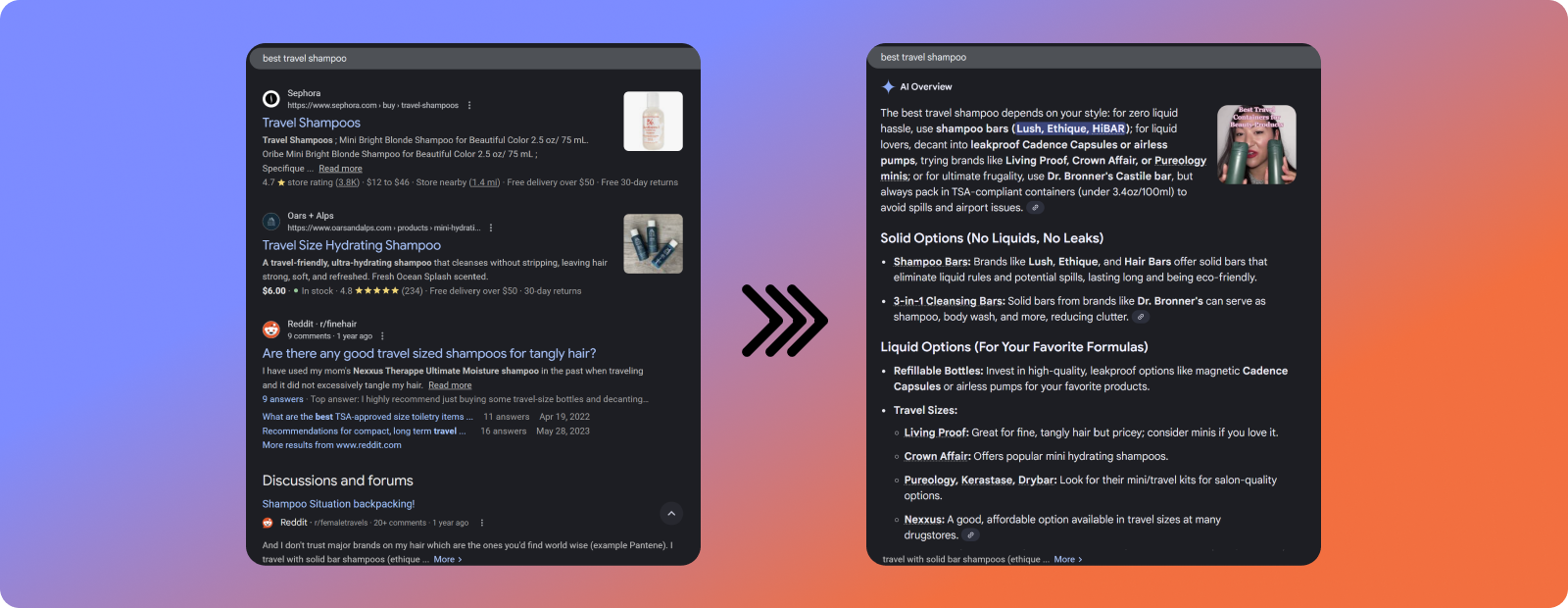
Traditional SEO, like Google searches, was all about helping customers discover your product. Someone searched for a product, the search platform would scan the internet, and if your website had the right keywords and brand positioning, you’d shoot to the top of the results. Any customer who entered the right keywords (for example, “good face moisturizer”) into a search platform would find you, click through to your website, and hopefully you’d end up with a satisfied new customer.
But AEO, spitting out responses to customers using AI platforms, is a little more complicated. For one thing, unlike SEO, AI platforms remember each customer’s previous inquiries, and tailor their response accordingly. So if different people enter the exact same prompt into AI, they’ll each get completely different, individualized results! (For example, if asked “What’s a good face moisturizer?” ChatGPT might recommend a high-end retinol to an upper-class soccer mom, a cheap-yet-Instagrammable face balm to a college student, and a soothing sunscreen to a tech-savvy fisherman.)
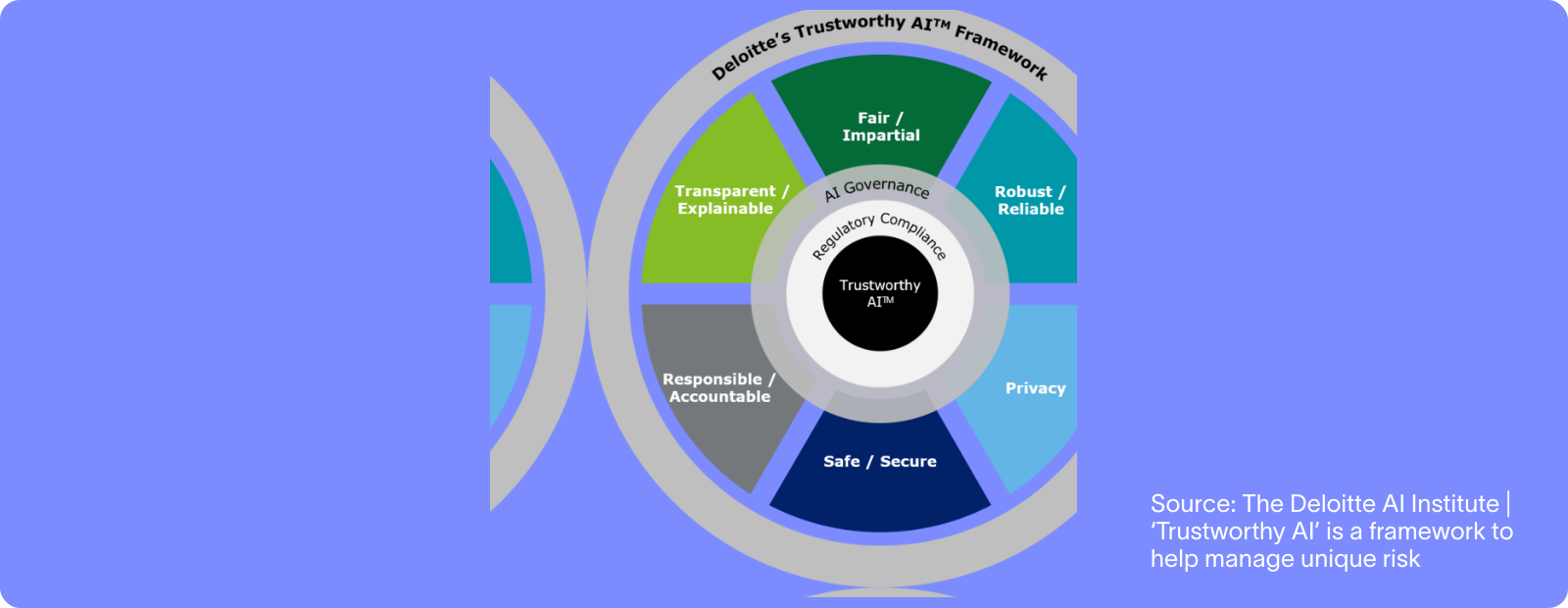
AI platforms are able to do this because instead of specific keywords, they rely on structured, credible data. Successful AEO teaches each AI platform about your product at a granular level. It structures and optimizes your data, sharing verified information like your product components, your reviews (both traditional and on social media), your certification from trusted authorities like environmental impact organizations. Ideally, the AI can understand your product and brand well enough to build on it when generating original content – like responding to each customer’s inquiry.
Both SEO and AEO may be a valuable, even essential, part of your marketing approach! But expertise in the keywords, backlinks, and brand positioning of SEO simply reflects a different skillset from the high-level data structuring that AEO requires. As a result, businesses asking their SEO experts to take on AEO responsibilities for which they’re not equipped are undermining themselves. Instead, as you begin to implement AEO, identify people or services who have proven expertise in the field you actually need.
This is especially crucial for businesses offering consumer goods and products. According to Bain, the more competitive the product category, the more consumers rely on AI. So, if your products include competitive consumer goods like personal electronics, furniture, cosmetics, or apparel, your future success may rely on your strong deployment of AEO.
But what does “good AEO” actually entail? Once you’ve committed to finding an AEO service, rather than using SEO-with-AI, how can you distinguish a practically useful tool from a waste of money?
Well, at this moment, across the burgeoning industry of AEO services, there are two major pitfalls to avoid: tools that focus on AEO visibility, and services that don’t understand your long-term goals as a company.
Let’s look at these issues one at a time.
First, a focus on visibility. This warning might seem counterintuitive; after all, lots of great AEO tools (including ours!) track how many times different AI platforms refer to your products. Yes, that information is crucial, but too many organizations don’t realize that those numbers are only the first step.
After all, your goal as a company isn’t information, it’s action. And on its own, AEO visibility is merely information, only valuable as a tracking tool. If your AEO informs you that your product is, for example, #5 in AI visibility rankings in comparison to your competitors, then you know you want to move up to #4 (and, eventually, to #1). But most AEO tools don’t offer practical, actionable steps towards improving – and without a direct route towards action, how much do you really care about the information?
One reason so few AEOs offer specific recommendations for your company to improve is that (as with so much about AI) it’s more complicated than it first appears. For one thing, different customers use different AI platforms, but each platform requires a slightly different approach. While all AI platforms rely on verified, trustworthy data, each – including popular AIs like Perplexity, ChatGPT, and Gemini – weights different authorities slightly differently. (For instance, Perplexity loves authoritative sources like Wikipedia, but Gemini relies on Google’s search capabilities.) And these days, major retailers like Walmart and Amazon are developing their own AI platforms, complete with personal shoppers, recommendations, comparisons, and in-app purchase links.
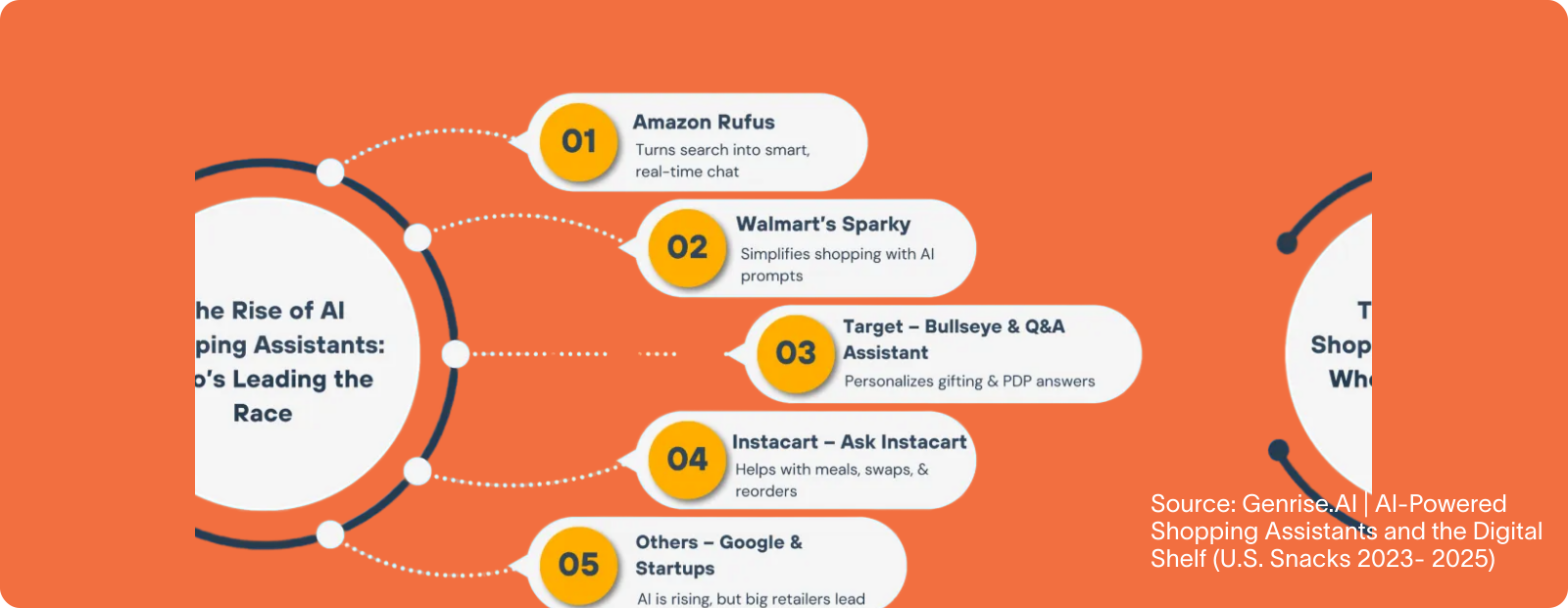
So to accurately provide you with actionable advice, your AEO tool would need to be both nuanced and comprehensive. It would have to analyze, understand, and provide recommendations on developing optimized content and data for each of your products, on each platform, without straining your team’s resources by constantly re-entering the product descriptions. More than that, the ideal AEO tool would have to know how, when, and where to distribute that optimized content for maximum impact, in order to connect with your ultimate human customers.
That’s a tall order. But that brings us to the final common error of AEO tools and services: failing to help you with your company’s ultimate goal.
At the end of the day, it’s pretty likely that you want to sell your products, burnish your reputation, and build an ever-growing and loyal customer base. After all, shifting your digital strategy to AEO can be resource-intensive, and you want to ensure ROI. But many AEO services end up prioritizing your appearance in AI prompts, rather than actual sales.
These services fail to understand that AEO’s role shouldn’t just focus on AI traffic and rankings, but help you actually convert that traffic to genuine sales. You’d probably prefer 10 customers who actually buy your products to 1000 incidental clicks.
At Novi, we consider this approach to be putting the cart before the horse. Our goal is always to not just to improve your AI rankings and visibility, but to provide specific, actionable recommendations to improve them; not just to connect you with new customers, but to ensure our tools will, in real-time, translate directly towards improving your sales.
As you consider what AEO tool might be right for you, you’re considering what partner you can trust to successfully position you and your business into the future of your industry. Just remember: the future is already here.