The online retail landscape’s shift toward agentic commerce accelerated in 2025 and shows no signs of slowing in the new year. Like most new trends, this one is accompanied by unique opportunities to win, pitfalls to avoid, and myriad takes on how to navigate it all correctly.
We’ve shared some of our own data-backed thoughts on the new paradigm already, and we’re thrilled to continue having conversations with brands and retailers about the right Answer Engine Optimization (AEO) strategies for their businesses in 2026. To that end, there’s one key point we want to highlight before the holiday season winds down and your Q1 to-do list is locked in.
When it comes to standing out in AI search, forget the query. Focus on being the answer.
So much of the discourse around AI understandably centers individual human users. The most prominent AI-powered platforms are tools for that market, and we’re interested in understanding how people think about, use, and can be reached through those tools. And so it makes sense that as the inciting human element in an interaction with AI, the user query pulls a lot of our attention.
Our parents, teachers, bosses, and mentors had it right: The first impression you make is everything. We can’t expect to win over everyone, but we compose ourselves and prepare for occasions where variables we control might inform a new acquaintance’s perception of who we are and what we’re about.
Let’s put it in AEO terms.
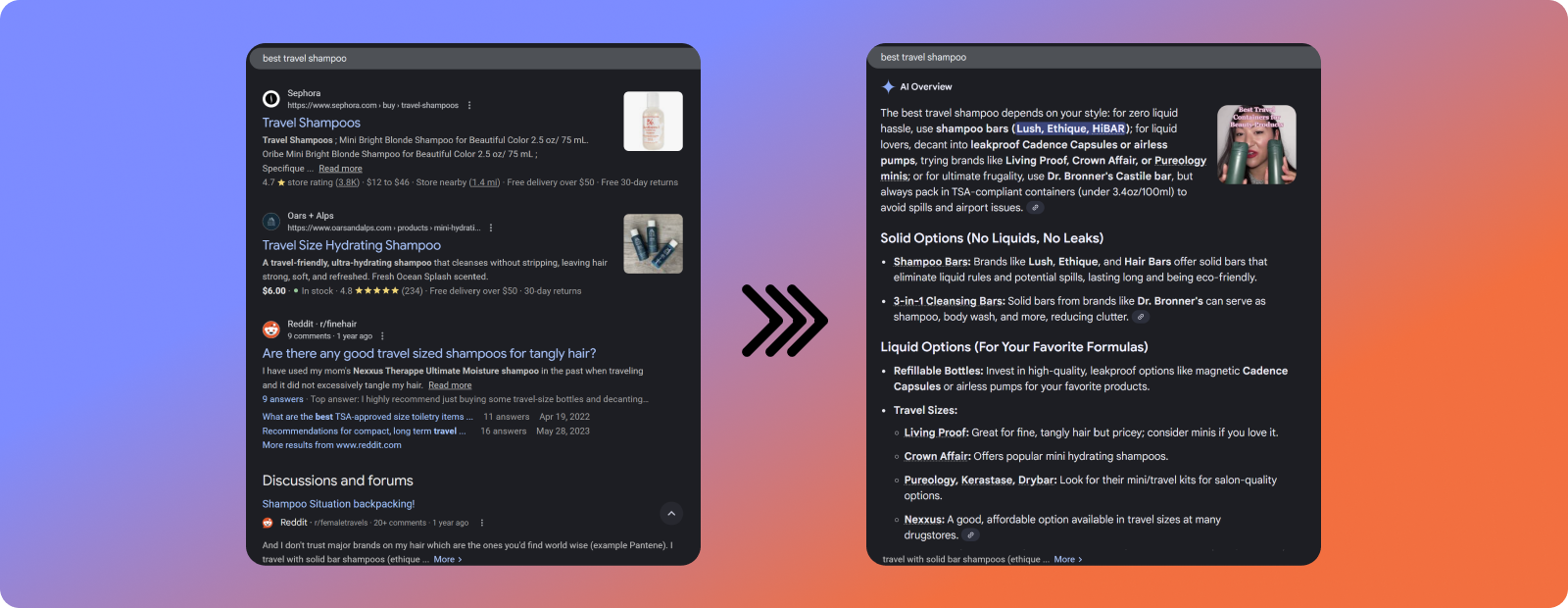
Brands that zero in on this perspective risk missing the point of LLMs and what they mean for marketing. Interactions in today’s search world are less standardized and more personalized. Users turn to AI platforms and ask unique questions backed by all the unique context of their articulated or implied preferences and even their prior interactions with a given platform. In response, they get unique answers. Many millions of users already value AI systems’ ability to stand apart from traditional search engines in this manner.
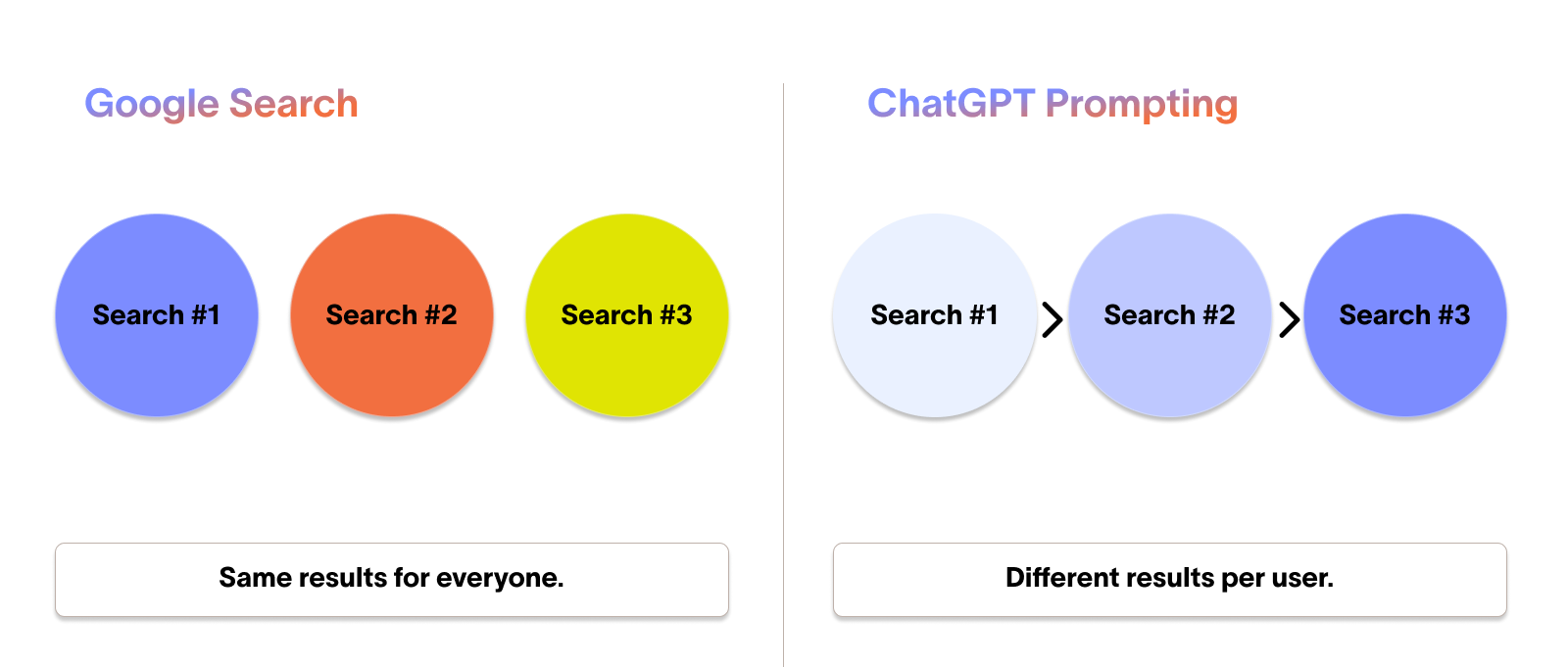
That’s why tailoring your online presence to anticipate user queries misses the mark. Every question asked of Claude or ChatGPT is a new variable that we can’t predict or control. Narrow it down to every question users ask about black winter coats under $150 and in stock now with delivery this week, and there are still too many surprise factors assumed, recalled, or unearthed by their AI assistant of choice.
Marketers will increasingly find that too big a twist of SEO-style thinking in the AEO strategy cocktail overemphasizes key search words and phrases that have already proven to be less influential in determining AI responses.
So we’re putting user queries aside. We’re controlling what we can control. Cutting edge AEO means knowing how AI thinks and offering a first impression that maximizes the odds that you’re part of its answer, no matter the question.
Imagine the world of agentic commerce as a crowded New Year’s Eve party. You’re new here; everyone’s a stranger, but they could be a friend or customer. Before you arrive, you might pull together a mental checklist of conversation topics or a thoughtfully selected outfit. These are the tools you’ll use to represent yourself in a way that’s honest, relatable, and hopefully memorable. That preparation may not suit each individual you meet. But you trust that, most of the time, you’re insured against fumbling in each first crucial moment of introduction. You might even come across a partygoer who’s willing to introduce you to a handful of other people they think would love to meet someone like you.
You don’t need to prepare a dozen sets of highly personalized conversation starters for each stranger you might encounter at the party. You can’t. And why bother when you can just keep in mind the smaller set of sensible questions, jokes, or pop culture references that are likely to land well in just about any room?
In AEO terms, we’re saying that filtering marketing strategy through the lens of user queries is grasping at variables we can’t control. Instead, it’s time to make broader, smarter, more efficient changes that suit the average roomful of people and not each individual in it. We achieve this with a focus on reaching the answer engines themselves.
Start by evaluating your brand’s own web presence to ensure that you’re controlling what’s yours to control. Build out your product detail pages to account for what we know about generative AI engines. Make sure all of your specs and other data are complete and correct so that in situations where your product is the best fit, it’s clear.
To take things a step further, build credibility for your products by highlighting any third-party verifications they’ve earned. If they’re certified as cruelty-free, sourced from a certain part of the world, or qualified for a program like Target Clean or MadeSafe, saying so is a way to let AI systems know that the good things you’re saying about your products are being said by other reputable sources too. These kinds of trust signals can triple or quadruple your likelihood of being surfaced by AI in its response to a relevant query.

Text responses from tools like Claude and ChatGPT come in some frequently recurring structures, like short conversational statements or easy-to-read grid formats. Talk their talk on your product pages! Deliver key differentiating product info in short FAQ-style statements that are written the way people actually speak. Make visual product comparisons easy for AI platforms to relay to a user through a chat window. If your data looks trustworthy and takes the shape of an AI response, you’re on your way to appearing in the AI responses that matter to you.
Once you’ve done this work in your own domain, make sure it’s available to others. Push your newly optimized data and framing to any retailers or other partner platforms where your products can be found. Consistency signals trustworthiness, and it’ll make it simpler for retailer-implemented chatbots to find you in those other storefronts.
We get it; parties and introductions can be stressful. But agentic commerce is just kicking off, and brands and retailers that don’t act now to meet the moment will regret their missed connections later. Novi has the tools to help you create the perfect first impression for this market, one that will make the party fun again.