AI on the Ball: Consumer Behavior in the New Year
Published December 2025 · 8 min read
By Novi
We’re just a couple of weeks away from closing the books on another calendar year. Are you ready yet? Whether we’re talking about a trip planned, a shopping list finalized, or a New Year’s resolution made, there’s no shortage of to-do list items to keep in mind. When it comes to resolutions in particular, marketers are no exception. Consumers are evolving, and so must we. And while we’ll leave that gym membership and the expanding reading list to you, let’s spend a few minutes focused on the trends that should inform your topline professional resolution: To keep pace with how shoppers shop in the next twelve months and beyond. No matter where you’ll be ringing in 2026, be certain that when the ball drops, you’re ready to maximize your position in the agentic commerce landscape.
Hi, Chat. How Do We Feel About AI?
There’s no denying that multi-purpose LLM systems had a banner year in 2025. This still-nascent technology is racking up new users and fans as fast as we can count them, and the trend shows no sign of slowing. We’ll run through some numbers below to make that point, so bear with us. They’re big, and they’re worth knowing.
Awareness is almost universal. The share of American adults who report that they’ve heard a little bit about AI is an eye-popping 95%. Raise the bar to focus on those who have heard “a lot,” and we’re still talking about nearly 50% of adults, almost double what was measured in 2022. AI has built a high profile on the international stage too, with 81% of adults abroad signaling awareness.1 Engagement does vary among race, ethnicity, and age demographics when we drill down on those totals, but no single group has managed to come close to tuning AI out completely.
We’re not just talking about people skimming headlines and tech reports. Awareness is translating to adoption. In 2025, it’s estimated that 62% of U.S. adults are using AI multiple times each week, while almost 50% report daily use. And here’s another big number: 73% of U.S. adults already say they’d be comfortable allowing AI to provide some degree of help with their daily activities. 2
So…about those daily activities. What exactly are we all using AI for? It turns out the easier question to answer is “What aren’t we using AI for?” And the answer is “Not much.”
Earlier this year, the Harvard Business Review published an updated analysis of the primary personal uses of AI. Entries in the Top 10 range from the practical – Organize My Life (#2), Generate Code (#5) – to the playful – Generate Ideas (#6), Fun & Nonsense (#7) – to the downright personal and philosophical – Therapy & Companionship (#1), Find Purpose (#3).3
In a professional setting, 13% of workers report that they’re currently leveraging AI in over a third of their daily work. Another 34% expect to be doing so within a year.4 And 51% of school-age individuals (14-22 years old) have reported using AI.5
So AI is a favorite colleague and consultant, and preferred study buddy, a trusted confidant and creative muse…and even a romantic partner. Yes, you read that right. Comfort with AI has advanced so significantly that some people have invited it into their most intimate sphere of (chat-based) interaction.6
Expect most of these numbers to continue inflating in the new year as forthcoming features and refinements make AI systems an even more attractive first stop for all kinds of problem-solving.
Hi, Chat. Let’s Talk Shop.
As we head into the new year, shopping sits firmly among the myriad daily activities for which we turn to AI.
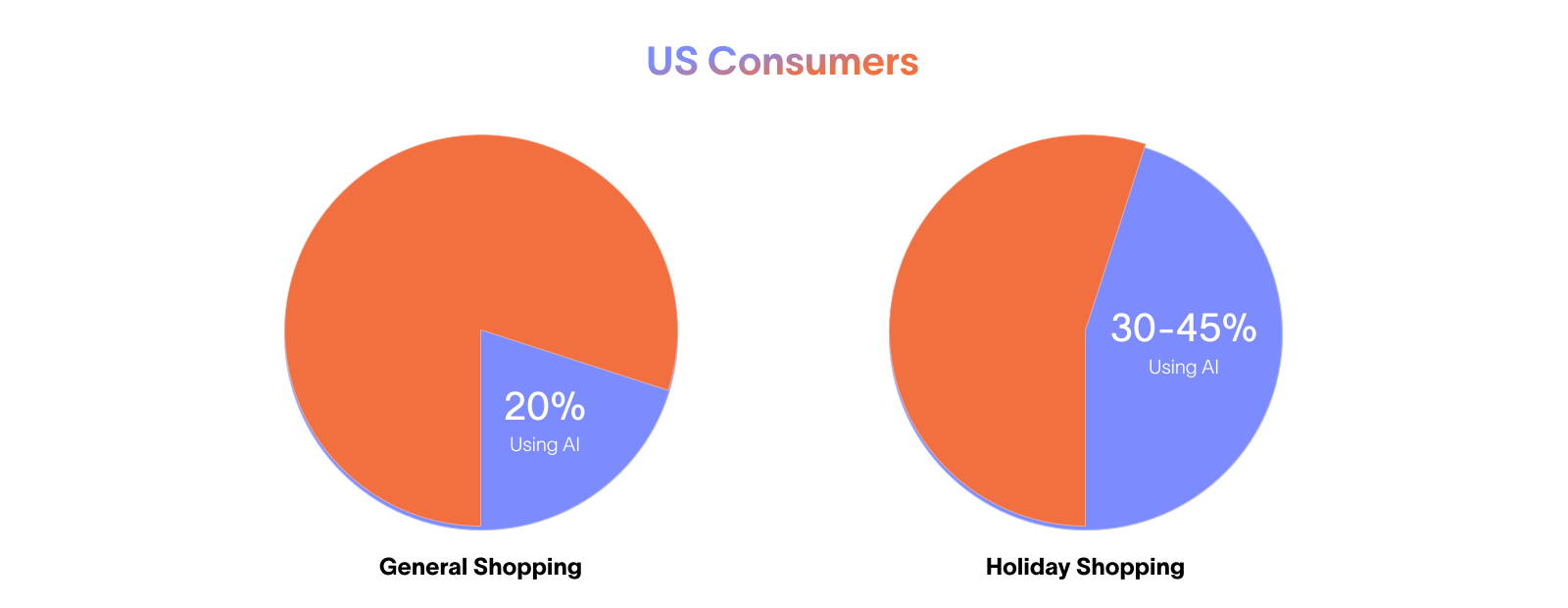
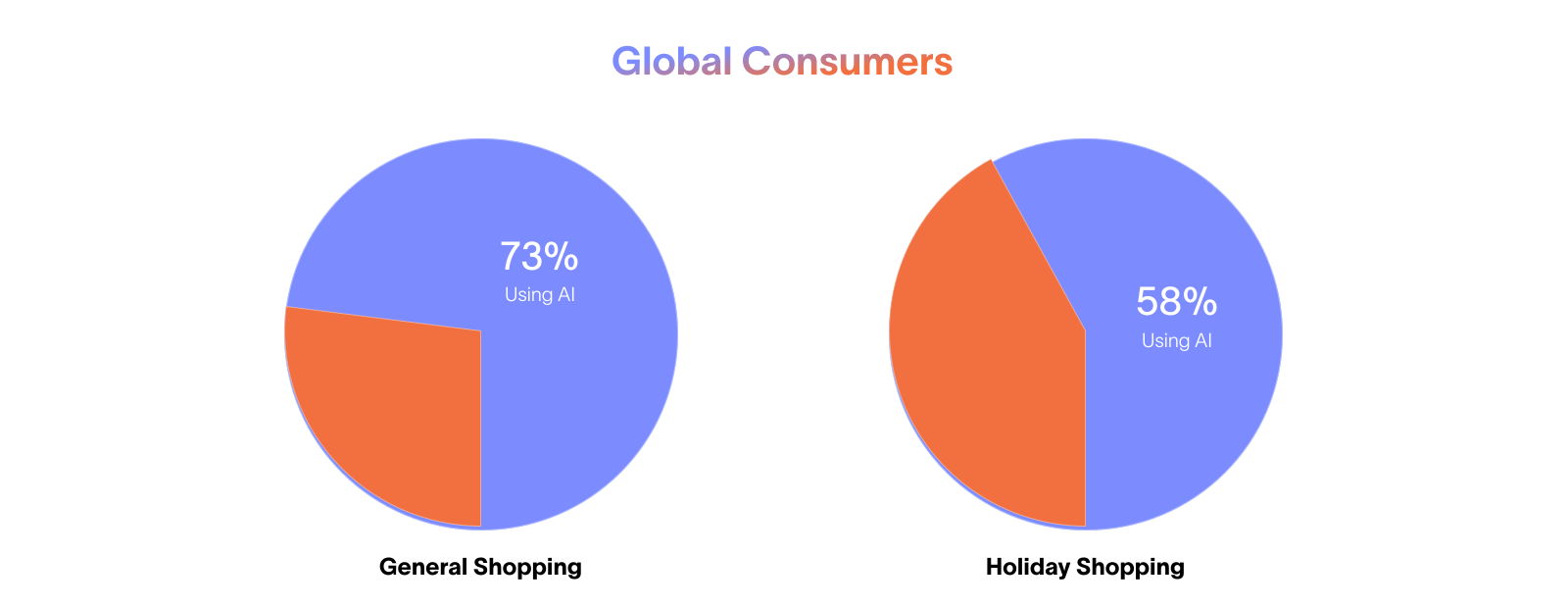
Programs like ChatGPT have established major traction with consumers. One fifth of Americans reportedly used AI tools to help with their shopping this year,7 with a spike to 30-45% as the holiday shopping season began to heat up.8 Worldwide, these numbers are estimated to be 2-3x bigger.9
Growth In AI-Assisted Shopping
(Fall 2025)
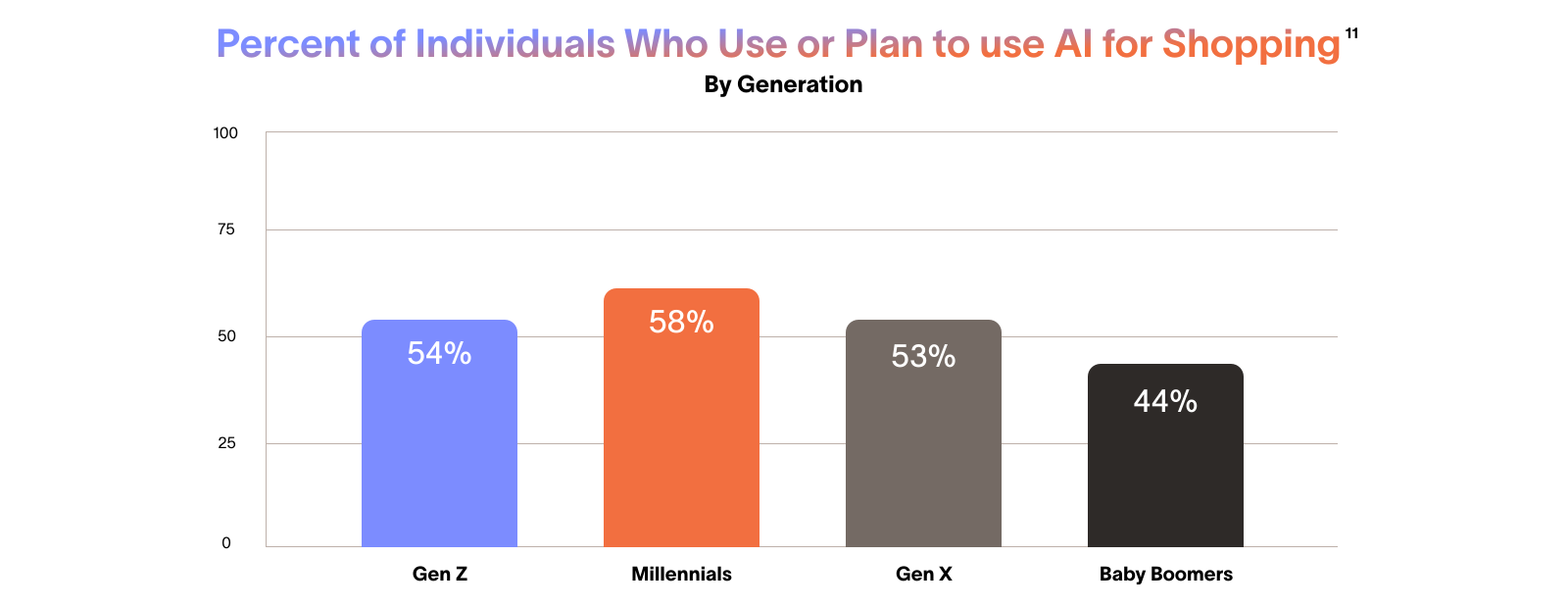
Consider all the challenges shoppers face: Product discovery, research, comparison. We’re already using AI for all of these, up to and including the ultimate purchase action. And AI is driving shoppers to actual retail sites in droves, with referrals this October charting 10x their volume a year prior.10
Hi, Chat. You’re Thriving. What Does It Mean For Me?
If you’re not convinced that this is a huge deal, we’re at a loss. And honestly, you could be too. If 2025 has been the proving ground for AI’s all-around utility, 2026 should see entrenchment and expansion.
Deep-pocketed tech backers have taken note of user interest and are pushing for more with new refinements to strengthen their foothold. Recent months have yielded multiple examples on the shopping front alone, including updates to Google Shopping and OpenAI’s launch of Buy It and Shopping Research features in ChatGPT. Upon its launch just a few weeks ago, Buy It’s functionality was limited to certain merchants on Etsy and Shopify. But in late November, both Walmart and Target announced comparable partnerships with the platform.12 We expect to see more major merchants engaging with these tools and adapting their online presence to connect better with the AI agents shaping the field of agentic commerce.
Expect to see an uptick in the use and efficacy of retailer-owned AI chatbots, too. These tools might not catch headlines in the same way, but they are another method by which a cross-brand shopping experience can be tailored to any individual customer’s preferences.
Keeping up with the pace of these changes to standard retail and shopping practice will demand marketing strategies on the cutting edge of the practice. And the cutting edge is thin by definition. Almost half of marketers in the space still don’t know how often their products show up in related AI queries and don’t yet have a plan to fix the problem.13
AI-powered consumerism demands something new and different from brands and retailers. Yesterday’s smart SEO strategy won’t be tomorrow’s answer; we already know that brands at the top of traditional search engine results cannot expect to see similar success in AI search.14 And indeed tomorrow’s answer, AEO, matters today, as experts anticipate traditional search engine use to take a 25% tumble in the new year.15
It’s time for brands to join the growing crowd of retailers who are meeting consumers where they are. Small businesses in particular have been slower than big corporations or individuals to adopt and adapt when it comes to AI.16 Winning on familiar marketing fronts still matters, but tackling AEO with equal focus is only becoming more crucial.
At Novi, we’re pretty thrilled about what all this means for brands, retailers, and consumers alike. So our resolution for 2026 is to meet you where you are in the new landscape. Our unique resources can help your team understand your AI visibility, restructure product data to reach the AI tools that make product recommendations and the shoppers who make purchases, and track your standing in the market over time. Sound AEO means your success will far outlast the average January gym membership. A happy new year means no ball dropped.
Endnotes
1. Poushter, Jacob, Moira Fagan, and Manolo Corichi. How People Around the World View AI. Pew Research Center, 15 Oct. 2025, Link.
2. Pew Research Center. “AI in Americans’ Lives: Awareness, Experiences and Attitudes.” Pew Research Center, 17 Sept. 2025, Link.
3. Zao-Sanders, Marc. How People Are Really Using Gen AI in 2025. Harvard Business Review, 9 Apr. 2025, Link.
4. Mayer, Hannah, Lareina Yee, Michael Chui, and Roger Roberts. Superagency in the Workplace: Empowering People to Unlock AI’s Full Potential. McKinsey & Company, 28 Jan. 2025, Link.
5. Nagelhout, Ryan. Students Are Using AI Already. Here’s What They Think Adults Should Know. Harvard Graduate School of Education, 10 Sept. 2024, Link.
6. Kraft, Coralie. They Fell in Love With A.I. Chatbots — and Found Something Real. The New York Times, 5 Nov. 2025, Link.
7. Gaudiaut, Tristan. “U.S. Consumers Warm Up to AI Shopping Tools.” Statista, Link.
8. Cheris, Aaron, et al. “Agentic AI in Retail: How Autonomous Shopping Is Redefining the Customer Journey.” Bain & Company, Nov. 2025, Link.
9. Wassel, Bryan. “Consumers Embrace AI for Research, but Few Have Allowed It to Make Purchases.” Customer Experience Dive, 20 Oct. 2025, Link.
10. Cheris, Aaron, et al. “Agentic AI in Retail: How Autonomous Shopping Is Redefining the Customer Journey.” Bain & Company, Nov. 2025, Link.
11. Winchell, Abigail. The Explosive Rise of Generative AI Referral Traffic. Adobe Digital Insights, 23 May 2025, Link.
12. Wassel, Bryan. “How Amazon, Target and Walmart Are Approaching AI in Customer Experience.” Customer Experience Dive, 24 Nov. 2025, Link.
13. Harmon, Grace. “Most Brands Aren’t Ready for AI-Driven Discovery.” eMarketer, 13 Aug. 2025, Link.
14. Rudzki, Tomek. “SEO Still Matters for AI Search Engines.” ZipTie.dev Blog, May 2025 (updated Oct. 2025), Link.
15. Gartner, Inc.. “Gartner Predicts Search Engine Volume Will Drop 25% by 2026, Due to AI Chatbots and Other Virtual Agents.” Gartner Newsroom, 19 Feb. 2024, Link.
16. Crumley, Bruce. “Small Businesses Are Slower to Adopt AI. Here’s Why.” Inc., 26 June 2025, Link.